Greenland has spent much of its modern existence being either ignored or misunderstood, flattened into a white smear at the top of a map or treated as an exotic footnote in documentaries about melting ice. Recently, however, it has been dragged abruptly into the centre of global politics, not because anything has changed in Greenland itself, but because Donald Trump has decided it should belong to the United States.
To understand why that matters, it helps to begin with what Greenland actually is, rather than what others project onto it.
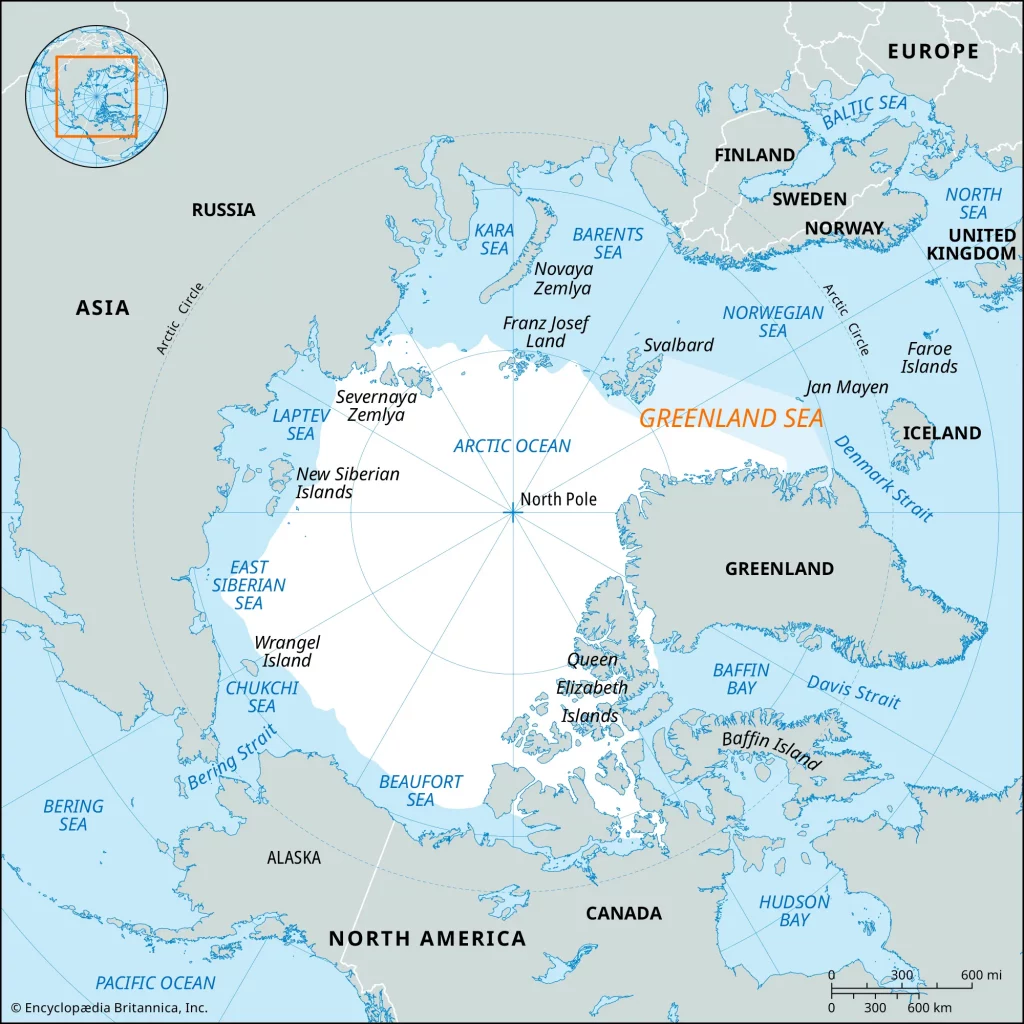
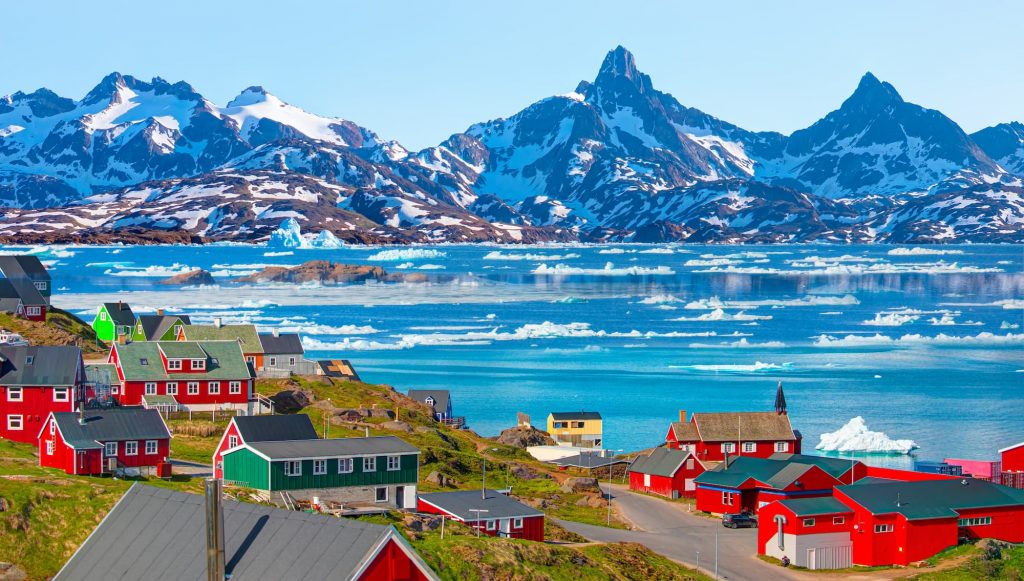
Greenland lies between the Arctic and North Atlantic oceans, east of Canada and west of Iceland. At just over two million square kilometres, it is the largest island on Earth, dwarfing most European states and stretching further north than most people ever travel. Map projections exaggerate its scale, but even corrected for distortion it remains immense. And yet fewer than 60,000 people live there, most along the coast, because the interior is dominated by an ice sheet that covers roughly four-fifths of the country.
That ice sheet defines Greenland’s landscape and its limits. Life exists at the margins, in narrow coastal corridors carved by fjords, in low Arctic tundra that briefly comes alive during summer, and in a scattering of towns unconnected by roads. Travel is by air or sea. Distance is not measured casually. Greenland is not empty by accident; it is empty because survival there has always required adaptation and restraint.
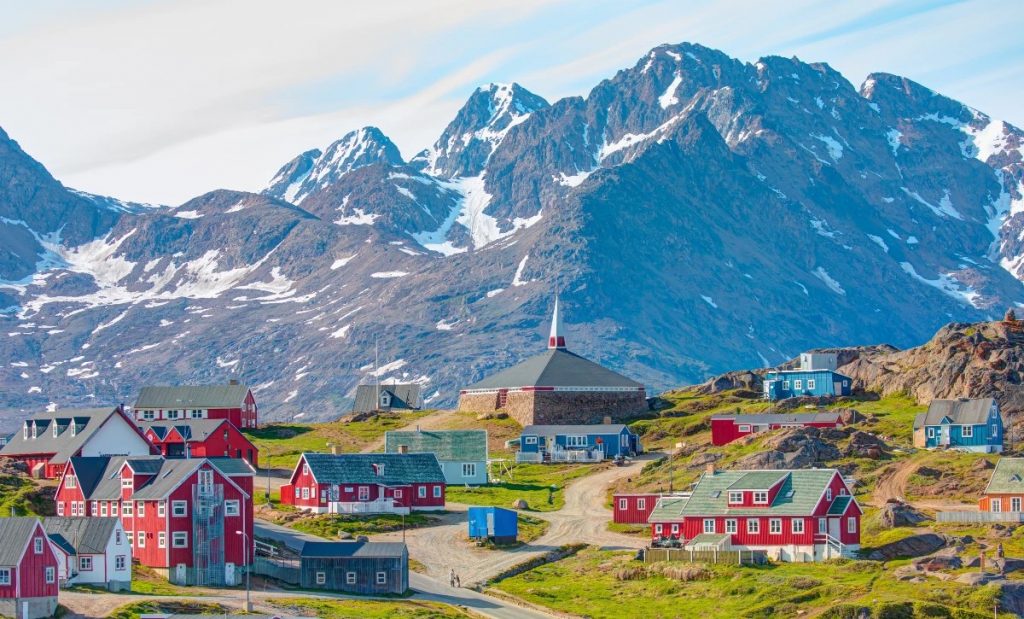
Despite the harshness, Greenland is not lifeless. Mosses, lichens and low shrubs cling to the tundra, and in the far south a sheltered valley supports the island’s only naturally occurring stand of taller trees. Wildlife has adapted in ways humans never fully can. Polar bears, Arctic foxes, musk oxen and reindeer roam land that appears hostile but is in fact delicately balanced. Offshore, the seas are rich with fish and marine mammals, and it is these waters, rather than the frozen interior, that sustain the modern economy.
Greenland’s climate defies easy shorthand. The interior is brutally cold and dry, while the coasts experience sharp regional variation. The west is comparatively milder, the east colder and stormier, and the south-east among the wettest parts of the Arctic, lashed by North Atlantic weather systems. Greenland holds the record for the coldest temperature ever measured in the northern hemisphere, yet recent summers have also produced temperatures warm enough to unsettle long-held assumptions about the Arctic as a permanently frozen world.
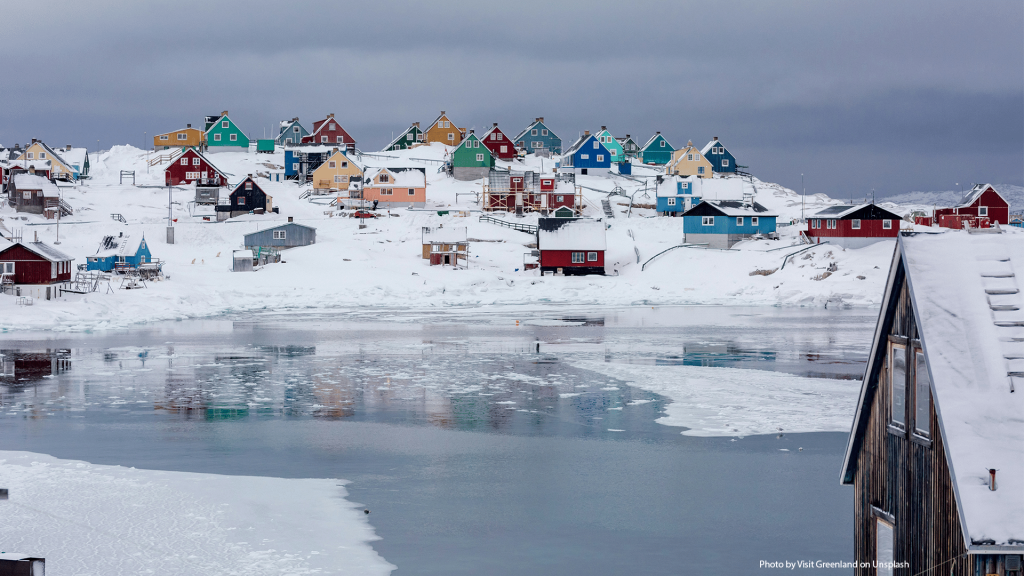
This physical reality matters because it places limits on the grand claims often made about Greenland’s economic potential. The island does have natural resources, but exploiting them is slow, expensive and politically contested. Fisheries are the backbone of the economy. Hydropower offers future possibilities. Mineral deposits exist, including elements considered strategically important in global supply chains, but many remain unproven or entangled with uranium, which is politically unacceptable to much of the population. Oil and gas extraction has been halted for environmental reasons. Greenland is rich in theory, but not easily monetised in practice.
Its political history is just as frequently oversimplified. Inuit peoples lived in Greenland long before Europeans arrived. Norse settlers established communities in the medieval period and then vanished, a reminder that even determined societies can fail in unforgiving environments. Denmark reasserted control in the eighteenth century, and Greenland was drawn into the Danish state through a mix of administration, mission and coercion. The legacy of that relationship includes both development and deep grievance, particularly over cultural suppression and social policy in the twentieth century.
Today, Greenland governs itself in most domestic matters through its own parliament and government, while remaining part of the Kingdom of Denmark. Defence and foreign policy remain Danish responsibilities, but since 2009 Greenlanders have had the legal right to pursue independence if they choose. Many support that idea in principle. Few believe it would be easy. What is clear is that Greenlanders do not see themselves as a commodity to be traded between distant powers.
This is what makes Trump’s interest so jarring. From a strategic standpoint, Greenland undeniably matters. Its location places it on critical routes between North America and Eurasia, and the United States already maintains a major military presence at Pituffik Space Base, which plays a role in missile warning and space surveillance. In an era of renewed great-power competition, the Arctic is no longer peripheral.
But Trump’s approach goes beyond strategy. He has repeatedly framed Greenland as something to be bought, owned and controlled, rather than engaged with through alliance or partnership. This reflects a broader instinct that runs through his politics: a preference for possession over cooperation, leverage over diplomacy, deals over relationships. It is the language of property applied to geopolitics.
There is also a familiar rhythm to the pressure he applies. Financial markets have coined the term “TACO (Trump always chickens out)”, shorthand for the pattern in which Trump escalates threats, particularly around tariffs or sanctions, before retreating or pivoting when consequences loom. The Greenland episode fits that mould. Loud declarations are followed by deadlines, pressure is exerted on allies, and then attention shifts elsewhere without resolution.
The wider implications are more serious than the immediate proposal. When powerful states speak casually about acquiring territory, even rhetorically, it weakens the norms that underpin opposition to expansionism elsewhere. Europe cannot argue against Russia’s actions in Ukraine, or caution China over Taiwan, while indulging similar logic among its allies. For NATO, credibility depends as much on restraint as on strength. Crucially, Greenlanders themselves are not ambiguous about this. Polling consistently shows overwhelming opposition to becoming part of the United States. That stance is not a rejection of independence or self-determination. It is a refusal to exchange one distant authority for another, louder one.
The most likely outcome is not annexation, nor even a negotiated transfer. It is boredom. Trump has a history of abandoning obsessions once they cease to deliver attention or advantage. Greenland will remain where it has always been, strategically important, environmentally fragile and politically complex, long after this particular fixation has faded. What will linger is the lesson. Greenland is not empty space on a map, nor an asset waiting to be claimed. It is a society shaped by geography, history and choice. Treating it otherwise says less about Greenland than it does about the world that now finds it so suddenly irresistible.