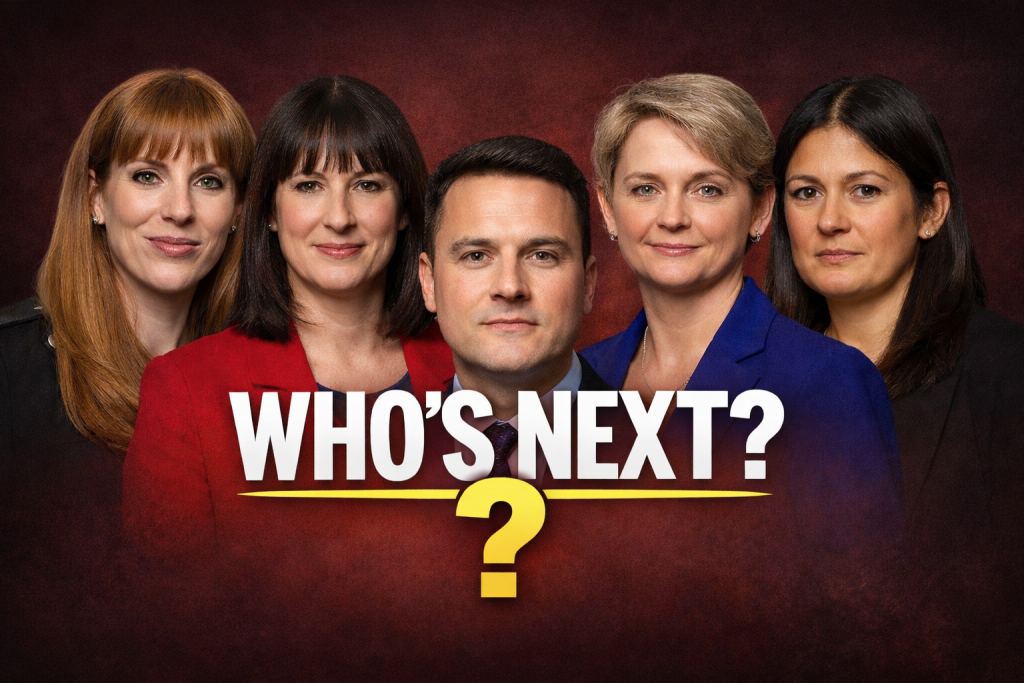
If Keir Starmer were to go tomorrow, the assumption in many folks minds is that Labour would simply regroup, appoint a successor, and move on. That assumption is wrong. The reality is that the Labour Party leadership machine moves like treacle, and the consequences of that delay would land at precisely the wrong moment for the country. Leadership changes do not happen in isolation.
They create vacuums, and vacuums matter when there is a great deal going on both internationally and at home. Britain is navigating global instability, ongoing conflict, strained alliances, and a domestic economy that is flat lining rather than recovering. In those conditions, uncertainty is not neutral. It carries a cost.
Recent history should make that obvious. The Conservatives burned through leaders at speed, each change weakening authority and credibility. The churn from Theresa May to Boris Johnson to Liz Truss and then Rishi Sunak did real damage to confidence, policy coherence, and Britain’s reputation for seriousness. At the last election Labour presented itself as the grown up alternative, but a messy and protracted leadership contest would risk repeating some of the same mistakes by different means.
Labour’s leadership rules are designed to prevent sudden takeovers and internal coups. That may be sensible in calm times, but it becomes a liability during moments of political shock. There is no automatic successor. There is no immediate handover. The clock only starts once a resignation is formal, and even then the process is slow, procedural, and inward looking.
Firstly, To even get on the ballot, candidates must secure nominations from a significant proportion of Labour MPs and support from party affiliates. This stage alone can take weeks, particularly when MPs are anxious about direction, polling, and their own seats. During that period there is no settled leader, only an acting presence with limited authority and little public legitimacy.
Once candidates are confirmed, the contest expands. Hustings are organised across the country. Ballots are issued to hundreds of thousands of members. Voting remains open for weeks. Even under pressure, the timetable runs to months rather than days. Labour would be debating itself while the economy stalls and international events continue regardless.
This is where the trade unions stop being background supporters and start pulling the levers. Labour’s system allows unions to exert heavy influence over leadership contests, deciding which candidates gain momentum and which never get going. That power often rewards loyalty to internal party politics rather than appeal to the wider electorate. In a long and messy race, union involvement is not incidental. It is decisive.
Several names would inevitably surface. Figures such as Angela Rayner, Rachel Reeves, Yvette Cooper, Wes Streeting or Lisa Nandy would all attract attention. Each would appeal to different parts of the party, and each would bring their own strengths and liabilities. That diversity would not shorten the contest. It would lengthen it.
Angela Rayner in particular is often treated as the obvious heir. She is not. There is no automatic elevation. She would need to secure nominations, survive scrutiny, and win a ballot. Before any of that, she would also need to clear up outstanding questions around her HMRC affairs. Until those issues are conclusively resolved, they would hang over any leadership bid, feeding media pressure and internal unease. Even if resolved quickly, the damage would not disappear overnight.
All of this feeds into the deeper problem of mandate. Any leader emerging from such a process would have the backing of members and affiliates, but not of the electorate. After the Liz Truss episode, voters are deeply sceptical of leaders chosen entirely through internal party mechanisms and then presented to the country as a fait accompli. Markets are sceptical too. They respond badly to drift, ambiguity, and the sense that a party is preoccupied with itself while the economy stagnates. International partners notice when leadership looks fragile or temporary. This is not theoretical. Britain has already lived through it before.
Labour can argue that its rules protect internal democracy, and to a point that is true. But internal democracy does not replace public consent, and it does not remove the risks created by delay. In moments like this, speed, clarity, and authority matter as much as values. The uncomfortable truth is that Labour is structurally ill equipped to execute a rapid leadership change without destabilising itself and unsettling the wider political environment. If Starmer were to go, the real question would not be who replaces him, but how much damage is done while the party works its way through a process never designed for urgency.
That is the risk Labour rarely acknowledges. And it is why the idea of simply changing leader, as if it were a quick fix, is far more dangerous than it first appears.