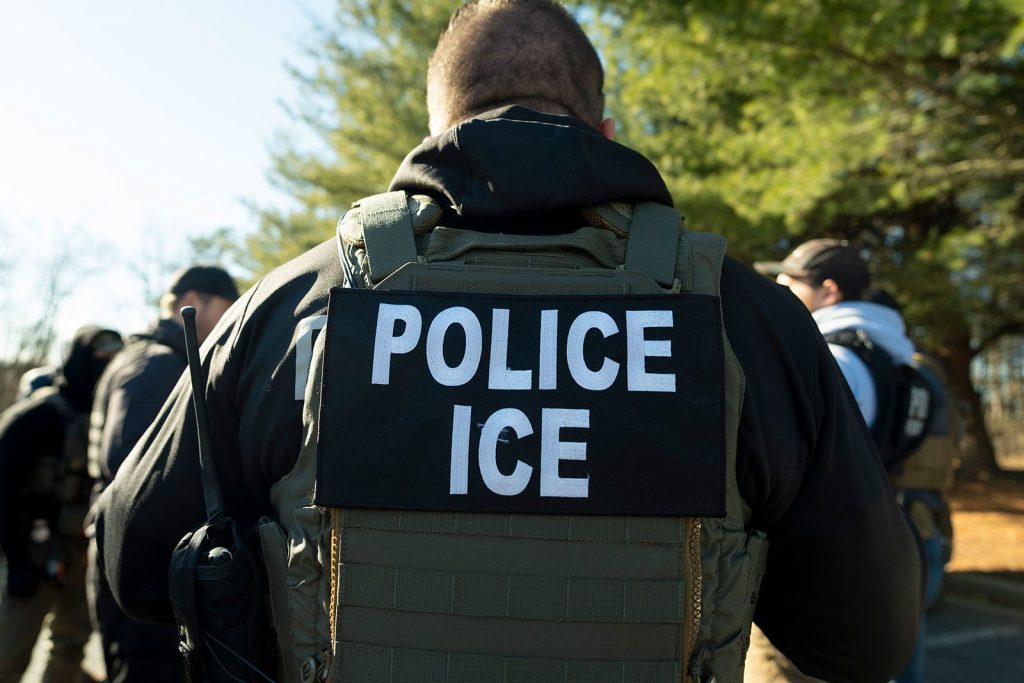
For years, the answer felt easy. The United States was noisy, complicated and often politically febrile, but for visitors it remained broadly familiar: big cities, vast landscapes, and a sense that whatever else was going on, tourists were largely insulated from it. That certainty has begun to wobble and with good reason. In recent weeks, two high-profile shootings involving federal immigration enforcement (ICE) have dominated US headlines. At the same time, National Guard troops have been deployed in a growing number of American cities, and immigration checks have become more visible and more assertive than ever. For travellers watching from the UK and Europe, the question everyone is asking now is the US still safe to visit? The honest answer is not a dramatic one, but it is more complicated than it used to be.
A different baseline
Let’s start with the uncomfortable reality that underpins much of the unease: violence in the US exists on a different scale to that of the UK and most of Europe. Firearms are the clearest example. Public health and crime data consistently show gun-related deaths in the United States occurring at rates many times higher than in Britain and well above the European average. The UK’s firearm death rate is among the lowest in the developed world; however, the figures in even the safest US states sit well above it.
That does not mean visitors are routinely caught up in shootings. Most gun deaths in the US involve people who live there, often in very specific circumstances. But for travellers used to countries where firearms are rare, the simple fact of their prevalence changes the background level of risk and, just as importantly, the way places feel. Broader homicide figures tell a similar story. International comparisons place the US several times higher than western Europe. Again, this does not translate neatly into danger for tourists, but it does mark the US as operating under different assumptions.
The key point is not that the US is uniquely unsafe. It is that visitors arriving from the UK or mainland Europe are stepping into a country where violence, statistically and culturally, occupies more space and whilst the chances of being involved remain relatively low they are increasing sharply. Of the 22, 830 homicides in 2023 it is thought 8% were foreign born. That doesn’t mean they weren’t US citizens it just means they were born elsewhere in the world.
Where tourists actually go
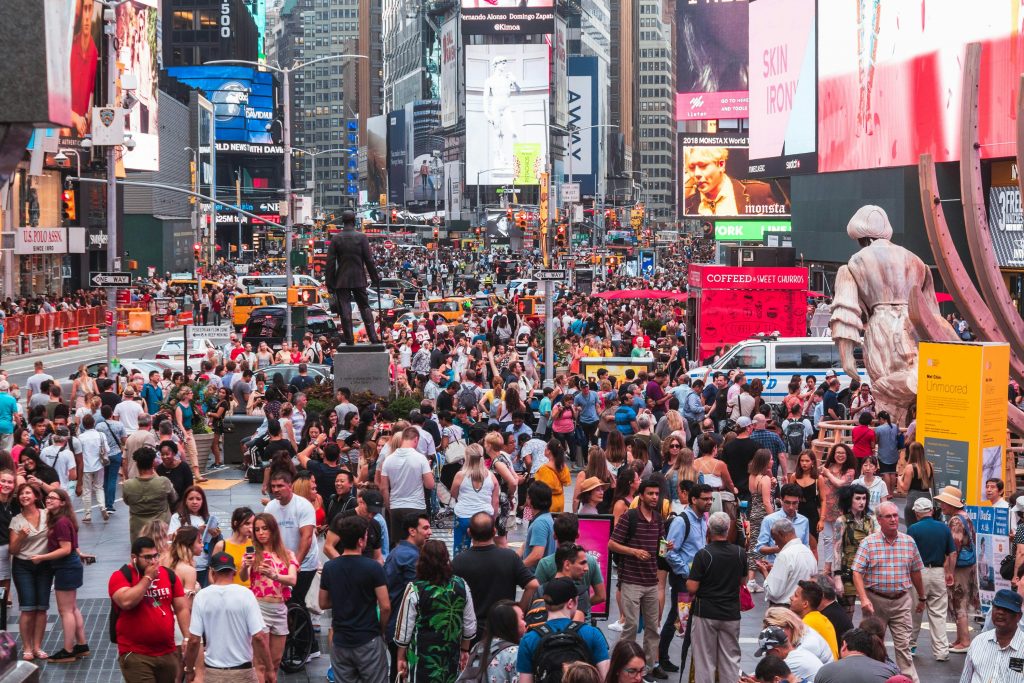
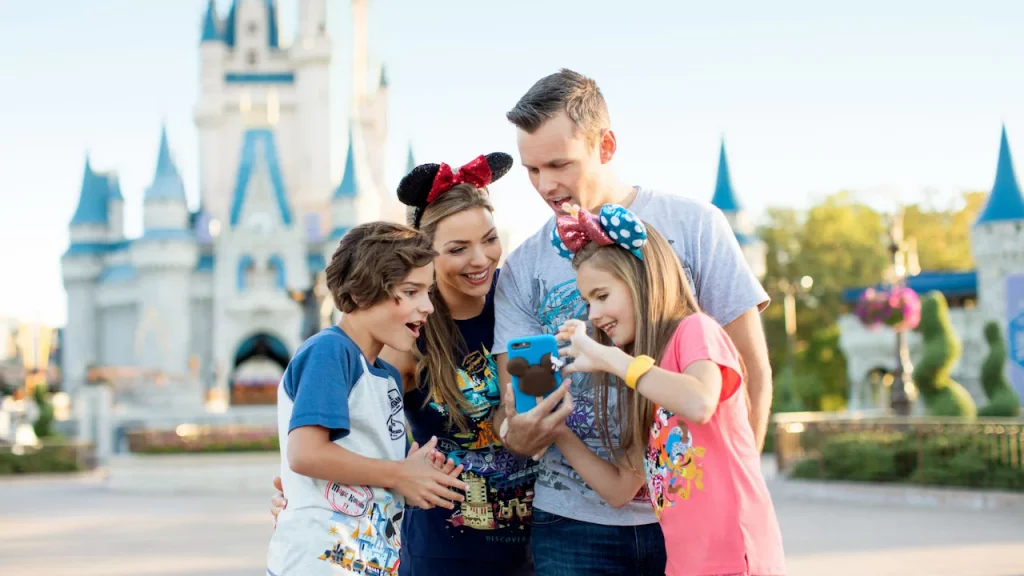
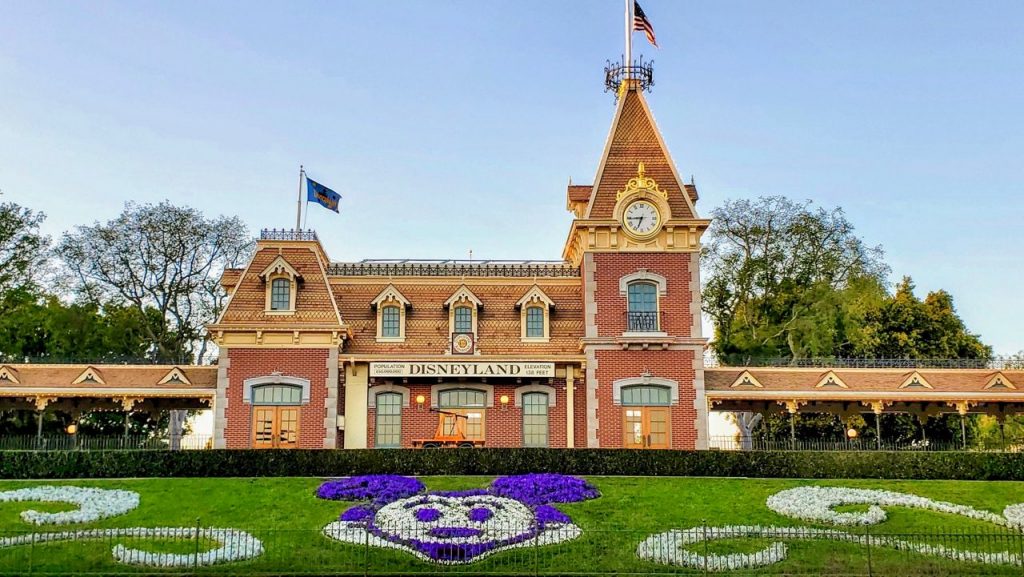
It is important to separate perception from experience though. Well-established tourist destinations such as New York City, Disneyland, Las Vegas, Orlando and San Francisco are no less safe than they have been for decades. These places are heavily policed, economically dependent on visitors, and designed to absorb large numbers of people with minimal friction. Millions pass through them every year without incident. For most travellers sticking to these well-trodden routes, the risk profile looks broadly familiar: keep your wits about you, avoid obvious trouble, and treat large cities as you would large cities anywhere else in the world.
The picture changes significantly for visitors keen to explore more off-beat areas, particularly in parts of the US where deprivation, drugs and gun crime overlap. In some towns and cities there are now neighbourhoods that locals avoid entirely, and where even law enforcement presence can be sporadic or reactive rather than preventative. This is, of course, not unique to America, but the scale matters. The gap between ‘safe tourist zone’ and ‘no-go area’ can be sharper than in many European cities, and it is easier for outsiders to stray across that line without ever realising it.
Why soldiers on the streets matter
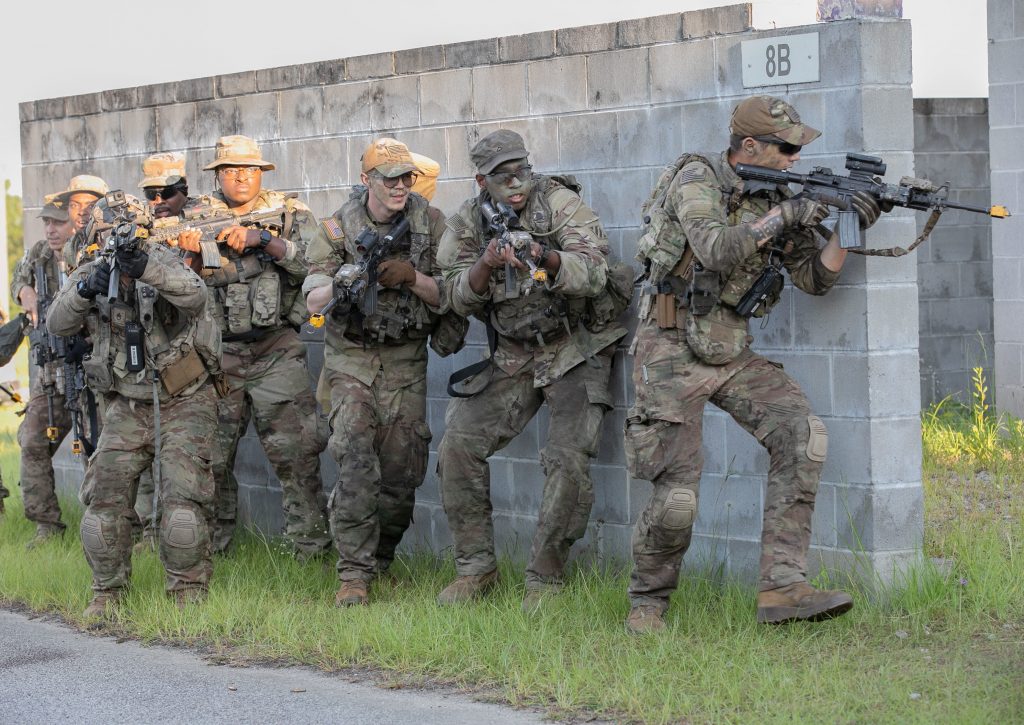
That sense of unease has been sharpened by the visibility of the state itself. Over the past year, National Guard units have been deployed in roughly ten US cities, involving thousands of troops nationwide. In Washington DC alone, more than 2,000 Guard members have been stationed on a long-term basis, while smaller deployments have appeared in cities such as Los Angeles, Chicago and Portland. These deployments are not aimed at tourists. Their stated purpose is to support local authorities, protect infrastructure, or respond to unrest. In practical terms, most visitors will never interact with them.
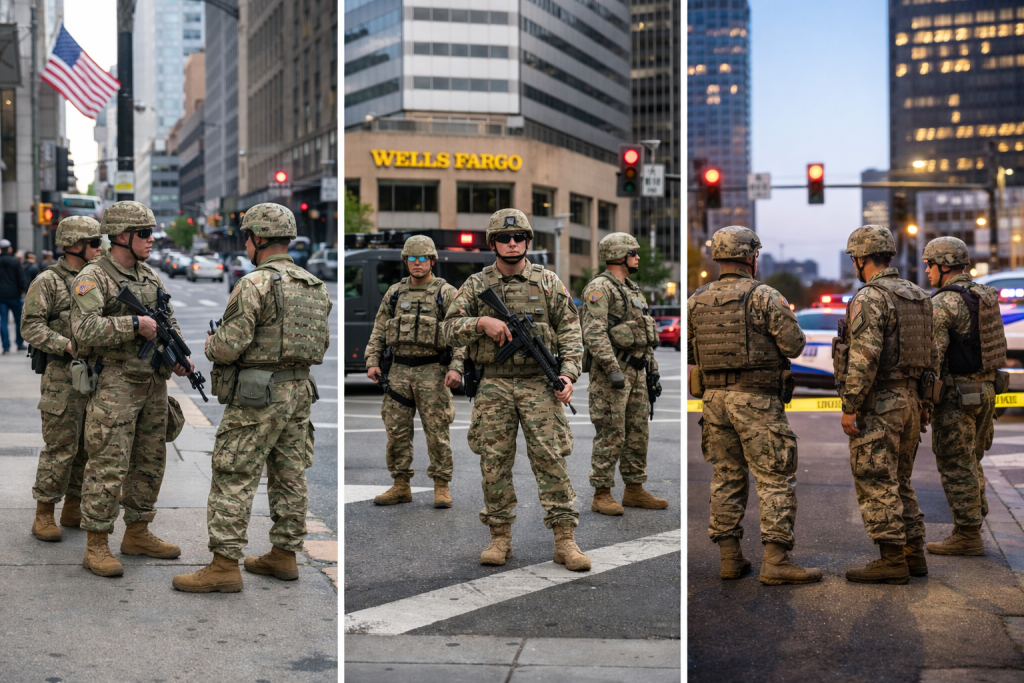
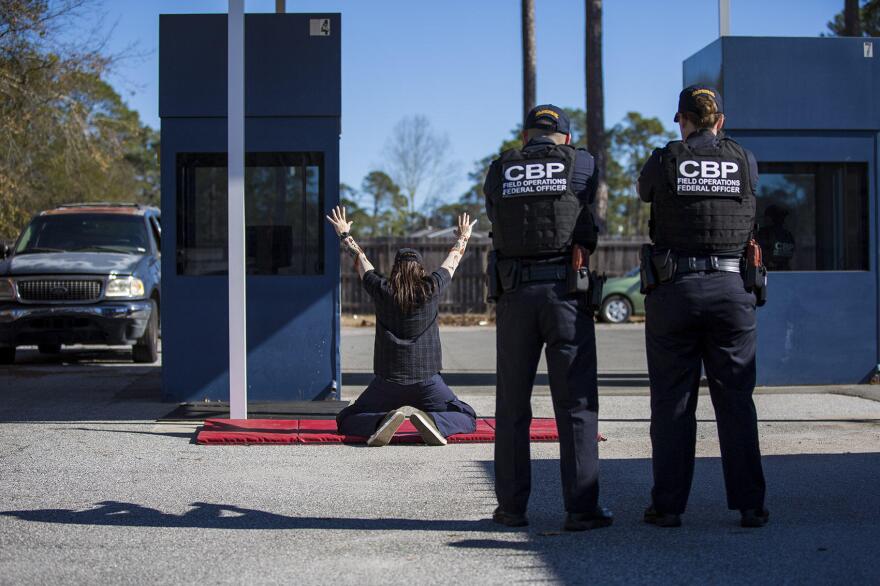
Symbolism matters though. For travellers from countries where soldiers are rarely seen on city streets outside emergencies, the presence of uniformed troops sends a signal that the country is under strain, even if the day-to-day risk remains low. Immigration enforcement has had a similar effect. High-profile operations by federal agencies have pushed immigration from a political debate into everyday public view. Tourists are not the target, but heightened enforcement and widely shared footage of confrontations inevitably colour perceptions.
Are people staying away?
To a degree, yes. Recent tourism figures suggest foreign visitor numbers to the US dipped last year even as global travel rebounded elsewhere. Industry bodies have pointed to a mix of factors: political volatility, tougher rhetoric on immigration, and a growing sense that the US feels more tense than alternative destinations. Europe, by contrast, has benefited from the perception, not always fair, but widely held. that it offers stability, walkable cities and fewer surprises at the border. This is not an exodus. Millions still visit the US annually. But travel choices are comparative, and right now the US is competing in a more cautious marketplace.
If safety doesn’t put you off, the cost might
Even for those unfazed by the political atmosphere, there is a more prosaic deterrent: money. The United States has become an extremely expensive place to be a visitor, particularly in the cities most people want to see. And the way prices work can make the shock sharper for UK travellers. Take eating out. A mid-range meal for two in a UK restaurant typically costs around £50, including service. In many US cities, the equivalent meal comes in closer to £70–£85 once tax and a standard 18–20% tip are added. And because the tipping culture is firmly engrained the menu prices rarely tell the full story. Moreover, there are plenty of anecdotes of tourists being chased across restaurant car parks by irate waiters for not tipping well enough.
Coffee is another small but telling example. A £4 coffee in London or Manchester feels normal. In New York, Los Angeles or Seattle, the same drink often costs the equivalent of £7 or £8, before local sales tax. Drink two a day and the difference adds up quickly. Even cheap benchmarks can be misleading. A Big Mac may cost roughly the same in Britain, as it does in the US once exchange rates are applied, but burgers don’t require tips, nor do they capture the cumulative cost of transport, accommodation and everyday convenience. Unlike in Europe, where trains, density and café culture can keep daily spending down, the US often demands extra outlay simply to function as a visitor: domestic flights, car hire, fuel, parking, and long distances that quietly inflate budgets.
So, is it still safe?
For most travellers, the US remains a place where serious harm is unlikely, especially if they stick to established tourist destinations. New York is still New York. Disneyland is still Disneyland. Notwithstanding this, the background conditions have shifted. Violence statistics sit higher than in Europe. Federal enforcement is more visible. Soldiers on city streets signal a country navigating internal strain. And the cost of simply being there has risen sharply. Whether that makes the US unsafe depends on how you define safety. If it means immediate personal danger, most visitors will never encounter it. If it includes political volatility, sharper social divides and financial pressure, the experience feels less comfortable than it once did.
For many travellers, the final calculation may not be fear at all, but value. The United States still offers extraordinary experiences it just asks more of you, in money and in mindset, than it used to, and in a world full of alternatives, that alone may be enough to make people pause.