Welcome
I write about life, family, travel, and the things I notice along the way, from everyday experiences to wider issues that affect how we live. Some pieces are personal, others are practical or reflective, but all of them are written in plain English and with care.
I’ve written several books, run a YouTube channel, and also publish a local community site alongside this one at newarklocal.co.uk. I enjoy getting out and exploring, asking questions, and taking the time to think things through rather than rushing to conclusions.
This is a place for considered writing and honest observation. You’re welcome to read along, dip in and out, and comment if you feel inclined.

Do you need something written?
I write clear, plain-English articles on local issues, travel, public policy, personal finance, and community topics — the same kind of writing you see on this site and on my other site at newarklocal.co.uk. If you’re an organisation, small business, or individual who needs thoughtful, well-researched content (articles, blog posts, opinion pieces, or background briefings), feel free to get in touch. I also help individuals organise and write personal memoirs or life stories, working from recorded conversations and background research, and shaping them into clear, readable narratives.
📧 michaelkempster@rocketmail.com
My Books
Follow me
Read my Posts
- How Many Images From the Iran War Are Fake? The Hidden Cost of Checking the Digital World
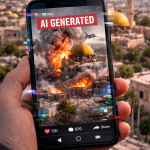 As images from the latest Iran war flood social media, a growing number are turning out to be fake. Some have been generated by artificial intelligence, others recycled from past conflicts, and some even lifted from video games. The result is a new challenge for journalists, researchers and governments trying to separate reality from digital fabrication. While AI promises huge productivity gains, a surprising amount of that time is now being spent verifying whether the technology’s output can be trusted. The hidden cost of the AI age may simply be checking whether the machines are telling the truth.
 - From ‘America First’ to America in Conflict: The Contradictions of a President at War With His Own Promises
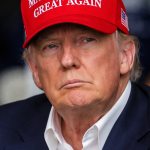 MAGA was built on the promise of restraint, fewer foreign entanglements, stronger borders, and a renewed focus on domestic priorities. Yet recent months suggest a presidency increasingly defined by international confrontation, contested executive authority, and mounting legal scrutiny at home. The gap between campaign rhetoric and governing reality has grown harder to ignore. This is not a partisan rant, but a structured examination of that contradiction. Has America First quietly become something very different.
 - What Comes After Starmer is not a Reset but a Messy Leadership Battle
 If Keir Starmer were to step aside, Labour would not get a clean or rapid reset. Its leadership rules are slow, complex, and built for internal democracy rather than moments of national urgency. A prolonged contest would create a vacuum at a time of international instability and a flat lining domestic economy. Trade unions would exert significant influence, shaping both the tone and direction of the race. The result would be a leader chosen by party mechanisms, not by the country, after weeks or months of uncertainty.
 - If Starmer falls, is Angela Rayner Labour’s Liz Truss moment waiting to happen?
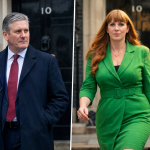 Keir Starmer is not yet gone, but politically he looks badly wounded. Public patience is thin, trust is fragile, and Labour’s promise to fix the rot in government is under real strain. When leadership changes happen in that climate, they are rarely calm or well planned. They happen under pressure, when parties reach for familiar figures rather than the safest option. If Starmer were to fall suddenly, pulling Angela Rayner forward could turn a difficult moment into a dangerous one.
 - Was Queen Elizabeth the Last Sane Royal in the House of Windsor
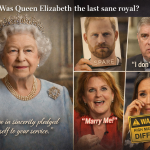 Was Queen Elizabeth the last sane royal the House of Windsor produced. Not perfect, progressive, or emotionally open, but disciplined, restrained, and instinctively aware of the limits of privilege. Her silence, shaped by wartime service and duty, stood in stark contrast to a family increasingly defined by grievance, spectacle, and self exposure. As interviews multiplied and private resentments became public currency, the monarchy drifted from service into performance. This is an unflinching look at how restraint died, and why it may be the institution’s last chance of survival.
 - What Is Nipah Virus, Should We Be Worried, and Why Does It All Lead Back to Bats Again
 Nipah virus isn’t spreading globally, but its return raises a more uncomfortable question. Why do the same viruses keep emerging, often in the same parts of the world, and what does that reveal about how fragile modern life really is? From deforestation and intensive farming to global travel and overstretched health systems, outbreaks like this are less about freak events and more about the conditions we keep creating.
 - Is it really still safe to visit the United States?
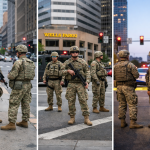 With National Guard deployments, heightened immigration enforcement and rising travel costs making headlines, many travellers are asking whether the United States is still safe and affordable to visit. This article looks at the evidence and what it means for visitors. You might be surprised with the conclusion.
 - Why Greenland Matters to Trump
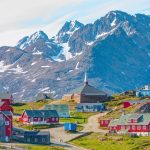 Greenland has suddenly become the focus of Donald Trump’s attention. This article explores why the world’s largest island matters strategically, politically and symbolically and what that says about power in a changing world.
 - The NHS crisis is real. But it won’t be solved by pretending everyone can be fixed.
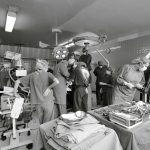 The NHS crisis is real. But avoiding difficult conversations is making it worse. Every winter hospitals reach breaking point and this year is no exception; however, until we get better at having honest conversations about what medicine can, and cannot achieve, the system will keep lurching from crisis to crisis.
 - How much you really pay for environmental policy — and where the money actually goes
 Most people have a rough idea of how much tax they pay. Income tax. National Insurance. VAT. Council tax. Fuel duty. What far fewer people realise is that, on top of all this, the average UK household is paying hundreds of pounds a year specifically tied to environmental policy and that the government does not spend anything close to all of that money directly on the environment itself.